
Comparing the Yamaha R1, R3, R6, R7 and R9 - See Specs, Horsepower, and More (2026 Update)

Updated March 2026
The Yamaha R-Series is a line of sportbikes designed for performance-oriented riders. These motorcycles are characterized by their sleek styling, high-revving engines, and nimble handling. The R-Series includes the YZF-R1, YZF-R3, YZF-R6, YZF-R7, and YZF-R9 — each with its own unique features and capabilities. And in 2026, many are updated and better than ever.
In 1961, Yamaha made its debut in the Road Racing World Championship Grand Prix and has been continuously learning technological and cultural lessons. This has helped shape its development into a brand recognized worldwide for quality and engineering. Today's R-Series lineup showcases the results of this research.
The original YZF-R1 was released in 1998 and though we've seen significant technological advances since then, one thing remains the same. Every part of this lineup is sure to be an exhilarating and eye-catching ride. Want to learn more about how it happened? Check out the pedigree of the R-Series.
In this post, we'll cover:
- Yamaha R1: An Introduction to a Legend
- Yamaha R3: An Entry Level Bike with Style and Performance
- Yamaha R6: Power, Handling, and Design
- Yamaha R7: It's All About Balance
- Yamaha R9: It's Finally Here
- Comparing the Yamaha YZF R-Series Sportbikes
Over the years, Yamaha released a number of motorcycles in the series - all designed to improve certain characteristics from the previous iteration or to fill a gap in the market. Yamaha Motor was founded with the aim of engineering motorcycles that could compete at the highest levels, particularly in the superbike segment. The strategic objectives behind the R-Series focused on delivering purpose-driven engineering to enhance rider comfort, performance, and racing capabilities. And though there are certainly differences between the bikes, it's clear when there's an "R" in the name, that the bike will be synonymous for an above average experience.
The R-Series models are widely recognized as superbikes, built to hold their own with top contenders in both racing and street performance. They are designed to push the boundaries of innovation and agility, reflecting Yamaha's commitment to excellence in the superbike category.
Let's start with the key specs for some of the most popular models in the series: the R1, R3, R6, R7, and the upcoming R9. We'll also break down the types of riders that each bike is a good fit for and touch on what changes we can expect for the model year 2026.
Introduction to the R-Series
The Yamaha R-Series stands as a testament to decades of relentless pursuit of supersport performance and innovation. Since its inception, the R-Series has captured the imagination of riders worldwide, offering a lineup of motorcycles that deliver an exhilarating ride on both the street and the track.
At the heart of this family is the legendary YZF-R1, a machine that has set the benchmark for what a true supersport experience should feel like. But the R-Series is more than just one model — it's a world ("R World") of options, including the agile YZF-R7, the approachable R3, and even smaller-displacement models like the R25, R15, and R125, each engineered to bring Yamaha's racing DNA to riders of all levels.
What sets the R-Series apart is Yamaha's commitment to integrating advanced technology into every model. Features like the traction control system and slide control system work in harmony to maximize grip and rider confidence, while the optional Öhlins electronic racing suspension on select models ensures perfect control and adaptability, whether you're carving through twisty roads or pushing the limits on the track. This dedication to performance, combined with sleek styling and a focus on rider engagement, has made the R-Series a benchmark for supersport motorcycles for over two decades. No matter which model you choose, you're guaranteed a machine engineered for excitement, precision, and the unmistakable thrill that only Yamaha can deliver.
History of the R-Series
The story of the Yamaha R-Series begins in the late 1990s, when Yamaha set out to redefine what a supersport motorcycle could be. The debut of the YZF-R1 was nothing short of revolutionary, introducing a lightweight chassis, a potent engine, and advanced features like the crossplane crankshaft that delivered excellent power and limited vibration for a direct connection between rider and machine. This focus on chassis stability and lateral rigidity quickly set the R1 apart, making it a favorite among riders seeking exciting acceleration and razor-sharp handling.
Building on this foundation, Yamaha expanded the R-Series with models like the YZF-R6, which brought true supersport experience to a broader audience with its accessible size and race-inspired performance. Over the years, the lineup has continued to evolve, with the introduction of the YZF-R7 and YZF-R3 offering riders even more ways to experience Yamaha's signature blend of performance and style. Each new generation has brought improvements in engine technology, chassis design, and rider aids, ensuring that every R-Series motorcycle delivers the kind of exhilarating ride and perfect control that Yamaha is known for.
Today, the R-Series remains at the forefront of the supersport world, with a loyal following of riders who appreciate its blend of sleek design, excellent power delivery, and uncompromising performance. Whether you're drawn to the legendary Yamaha YZF-R1, the balanced YZF-R7, or any of the other models in the lineup, you're joining a legacy of innovation and excitement that continues to shape the future of motorcycle riding.
Yamaha R1: An Introduction to a Legend
When Yamaha released the R1, its impact was immediate in the world of superbikes. In fact, it was considered so influential that Japanese journalists named the effect the "R1 shock". At the time, its stability, traction, and rideability were unprecedented. The R1 was developed with a focus on pushing the boundaries of sportbike performance through advanced engineering and technology.
The R1 has a new model release in 2026. (PS: Want to see more new bikes you don't want to miss in 2026? Check out our round up from EICMA.)
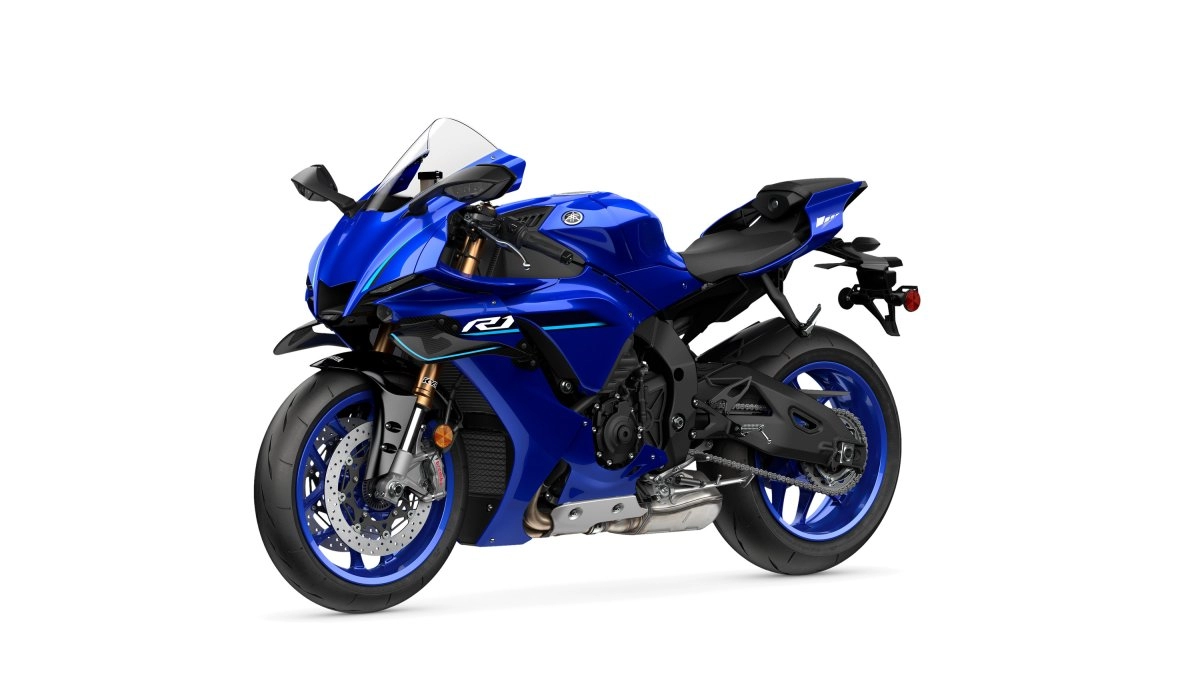
2026 Yamaha R1 Specs
- Engine Type: 998cc, liquid-cooled inline 4 cylinder DOHC; 4 valves per cylinder
- Power: 198 hp
- Torque: 83 ft-lb
- Bore x Stroke: 79.0mm x 50.9mm
- Compression Ratio: 13.0:1
- Fuel Delivery: Fuel injection with YCC-T and YCC-I
- Transmission: 6-speed; wet multiplate assist and slipper clutch
- Final Drive: Chain
- Suspension / Front: 43mm KYB® inverted fork, fully adjustable; 4.7-in travel
- Suspension / Rear: KYB® single shock, fully adjustable; 4.7-in travel
- Brakes / Front: Dual 320mm hydraulic disc; Brake Control System and ABS
- Brakes / Rear: 220mm hydraulic disc; Brake Control System and ABS
- Tires / Front: 120/70ZR17 Bridgestone® BATTLAX RACING STREET RS11F
- Tires / Rear: 190/55ZR17 Bridgestone® BATTLAX RACING STREET RS11R
- Starting Price: $19,199
Dimensions, capacity, and colors:
- L x W x H: 80.9 in x 27.2 in x 45.9 in
- Seat Height: 33.7 in
- Wheelbase: 55.3 in
- Rake (Caster Angle): 24.0°
- Trail: 4.0 in
- Maximum Ground Clearance: 5.1 in
- Fuel Capacity: 4.5 gal
- Fuel Economy: 33 mpg
- Wet Weight: 448 lb
- Warranty: 1 Year (Limited Factory Warranty)
- Colors: 70th Anniversary Edition (white and red speed block livery with gold details) and Team Yamaha Blue. Matte Raven Black is available in some regions.
The Yamaha R1 was designed to deliver thrilling riding experiences to the most demanding riders. With its high-revving engine, lightweight build, and electronic rider aids, the R1 offers superb handling and power.
New for 2026: Updates and Features to Look For
For 2026, the Yamaha YZF-R1 celebrates a major milestone with the introduction of the 70th Anniversary Edition, featuring a nostalgic white and red "speed block" livery, gold emblems, and unique badging to commemorate Yamaha's racing heritage. While it maintains the legendary 998cc CP4 crossplane engine and lightweight Deltabox frame, it benefits from several "final form" hardware upgrades that first appeared in late 2025. This includes the addition of high-performance Brembo Stylema monobloc calipers and a Brembo radial master cylinder, which significantly improve brake power and feel compared to previous years. The aerodynamics have also been modernized with MotoGP-derived carbon fiber winglets designed to increase front-end downforce and stability during high-speed cornering and heavy braking.
On the technical side, the 2026 model receives a completely redesigned 43mm KYB front fork (on the standard model) that offers a new Kashima coating and independent adjusters for better road feel. The ergonomics are slightly refined with a new textured seat cover designed to balance rider grip with the ease of movement required for track transitions. While these updates keep the R1 at the top of the liter-bike class in the U.S. and other markets, it is important to note that the R1 has transitioned to a track-only model in Europe due to tightening emissions standards. Consequently, the 2026 street-legal R1 is increasingly seen as a collector's peak for the platform, blending its most advanced mechanical and electronic suites — including the 6-axis IMU — with its most iconic historical aesthetic.
Who is the Yamaha R1 made for?
The R1 is the type of bike that even non-riders know about. And for those who do ride - this bike is often a dream (for those who are into sport bikes). It has a standout power-to-weight ratio and in its most recent iterations (2020 and newer) it is recognized for improved responsiveness and suspension.
And the new features mentioned above even further demonstrate just how unforgettable the latest iteration is going to be.
Is the Yamaha R1 safe for beginners? Given its performance specs, the answer is probably not. Because of how it handles, a high level of skill and control are crucial. So, if you're on the newer side of things, you may want to instead consider the R3, which we look at below.
Yamaha R3: An Entry Level Bike with Style and Performance
Even though the R3 isn't the biggest bike in the series it is just as serious about its purpose as the others. With YZR-M1-inspired top clamps, forged aluminum pistons, and sleek bodywork, the R3 bears a striking resemblance to the larger iterations. Its tractable 321cc engine makes it an attractive option for riders who may feel intimidated by the stronger models.
The R3 is known for a lightweight chassis and agile handling that make it easy to maneuver and navigate through tight corners and turns, and its comfortable seating position makes it ideal for longer rides. Its steel Deltabox frame was engineered to deliver precise handling and nimble cornering response, making it the perfect platform for new riders looking to build confidence without sacrificing sporty performance.
Not unlike a few other bikes in the R-Series, the R3 was re-released in 2025 to help it better compete with newer rivals like the Ninja 500 and Aprilia RS 45. In 2026, it has undergone some additional improvements to help it look more like its bigger siblings while improving daily usability.
These changes include:
- New Face: Retains the single-eye projector LED look and M1-style ducting introduced in late 2025.
- 70th Anniversary Edition: Also available in the heritage red-and-white racing colors for 2026.
- Improved Reach: Narrower seat and side covers designed to make it easier for riders to touch the ground.
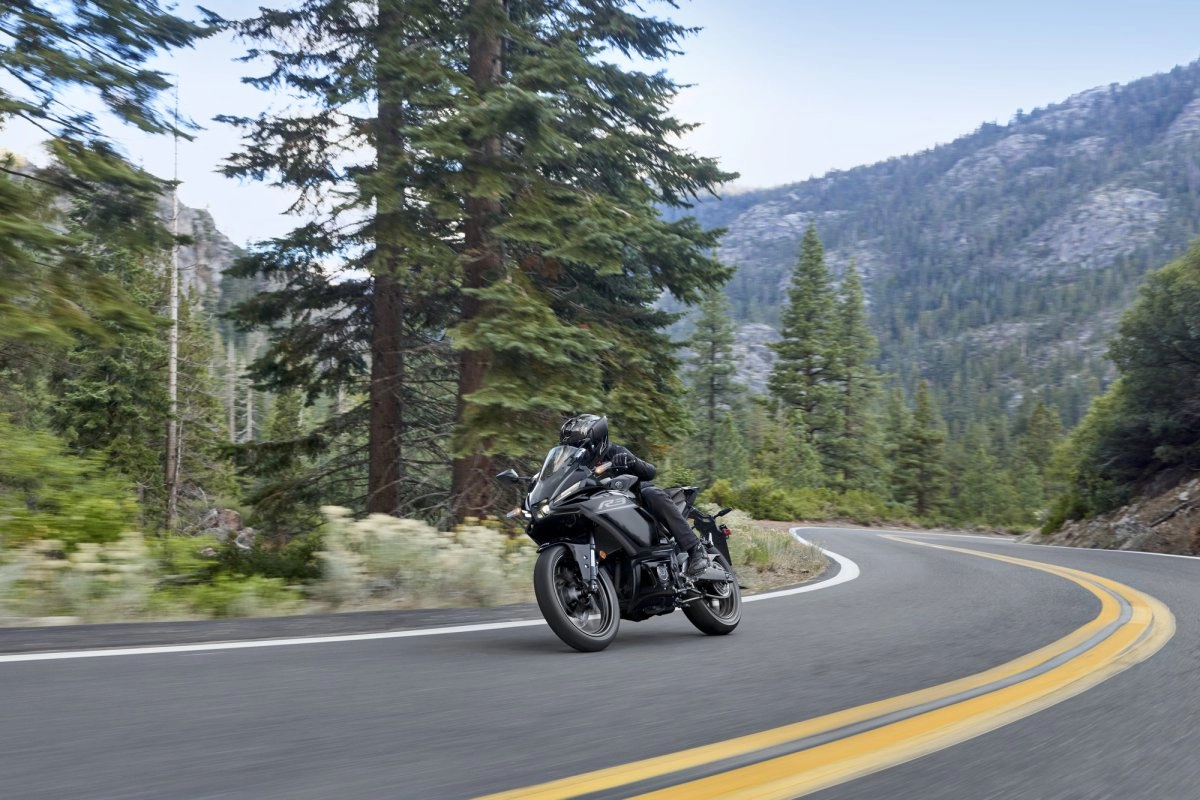
2026 Yamaha R3 Specs
- Engine Type: 321cc, DOHC, liquid-cooled parallel twin; 4 valves/cyl.
- Power: 42hp @ 10,750 rpm
- Torque: 21.8 lb.-ft. @ 9,000 rpm
- Bore x Stroke: 68.0 x 44.1mm
- Compression Ratio: 11.2:1
- Fuel Delivery: Fuel injection
- Transmission: 6-speed; multiplate wet clutch; with Assist & Slipper clutch
- Final Drive: Chain
- Suspension / Front: Inverted telescopic fork; 5.1 in. travel
- Suspension / Rear: Monocross single shock, preload adjustable; 4.9 in. travel
- Brakes / Front: 298mm hydraulic disc w/ ABS
- Brakes / Rear: 220mm hydraulic disc w/ ABS
- Tires / Front: Dunlop Sportmax GPR-300F; 110/70-17
- Tires / Rear: Dunlop Sportmax GPR-300R; 140/70-17
- Starting Price: $5,499
Dimensions, capacity, and colors:
- L x W x H: 82.3 in x 28.9 in x 44.9 in
- Seat Height: 30.7 in
- Wheelbase: 54.3 in
- Rake (Caster Angle): 25.0°
- Trail: 3.7 in
- Maximum Ground Clearance: 6.3 in
- Fuel Capacity: 3.7 gal
- Fuel Economy: 56 mpg
- Wet Weight: 373 lb
- Warranty: 1 Year (Limited Factory Warranty)
- Colors: Team Yamaha Blue; Matte Stealth Black; Lunar White / Nebular Blue
With its advanced technology and eye-catching design, the R3 offers a combination of style, performance, and affordability that is unmatched in its class.
Reminder: 2025's Updates for the R3
Need a quick refresh of the changes made to the R3 in 2025? We've got you.
- New Generation R-Series Styling: The 2025 model features new front fairing, sleek new side panels and a sporty new tail section with signature R-series tail wing.
- Modern LED Lighting: This includes a new single projector-type headlight flanked by four-element position lights, along with a new LED tail light and turn signals.
- Smartphone Connectivity: Enjoy Yamaha Motorcycle Connect (Y-Connect) smartphone connectivity which works in conjunction with the free-of-charge Y-Connect app (for iOS and Android) to enable a direct connection to your smartphone. This means you can view incoming calls, email and message notifications.
- New LCD Display: The new instrument cluster now displays connected smartphone information along with crucial bike data. A new USB-A socket will be located next to the display providing a charge for your phone or for heated gear.
- New Assist & Slipper Clutch: With an assist cam and slipper cam, excessive engine braking is reduced for a smooth, easy-to-handle feeling during downshifts while also minimizing the amount of force needed to pull the clutch lever.
- New Color: Lunar White / Nebula Blue — a fresh two-tone finish that looks stunning from the front fairing all the way back to the rear wheel.
Who is the Yamaha R3 for?
The Yamaha R3 hits the mark for beginners thanks to its combination of style, performance, and affordability. It has a more upright riding position than other bikes in the R-Series and isn't as tall or heavy - all of which make for an easier experience. However, that's not to say a more experienced rider won't enjoy this bike - particularly given how much more comfortable it can be on a longer ride than some of its sportier counterparts.
Yamaha R6: Power, Handling, and Design
The Yamaha R6 is a high-performance sport motorcycle known for its sleek design and responsive handling. With a reputation for being one of the best handling in its class, the R6 is a popular choice among riders who value precision and agility on the road or track. The R6 doesn't appear to be in Yamaha's current production line, so you'll need to find it on the used market. (PS: if you've got an R6 you're ready to sell, don't miss our article on how to sell your motorcycle online.)
Its aerodynamic bodywork and aggressive styling are a testament to Yamaha's background, and the use of carbon fiber bodywork in certain models further enhances performance and reduces weight, reflecting the brand's commitment to race-bred technology. Its advanced technology is designed to enhance the rider's experience, making it easier to push the limits and explore the full potential of the motorcycle.
The R6 is also known for its smooth power delivery, which allows riders to quickly and confidently navigate tight corners and straights. Its 599cc inline-four engine was developed alongside Yamaha's World Supersport Championship program, ensuring every rev delivers the kind of high-strung, race-bred performance that has made it a benchmark in its class.
Overall, the Yamaha R6 is a motorcycle that has been designed with performance and excitement in mind, making it a top choice for riders who crave the thrill of high-adrenaline riding.
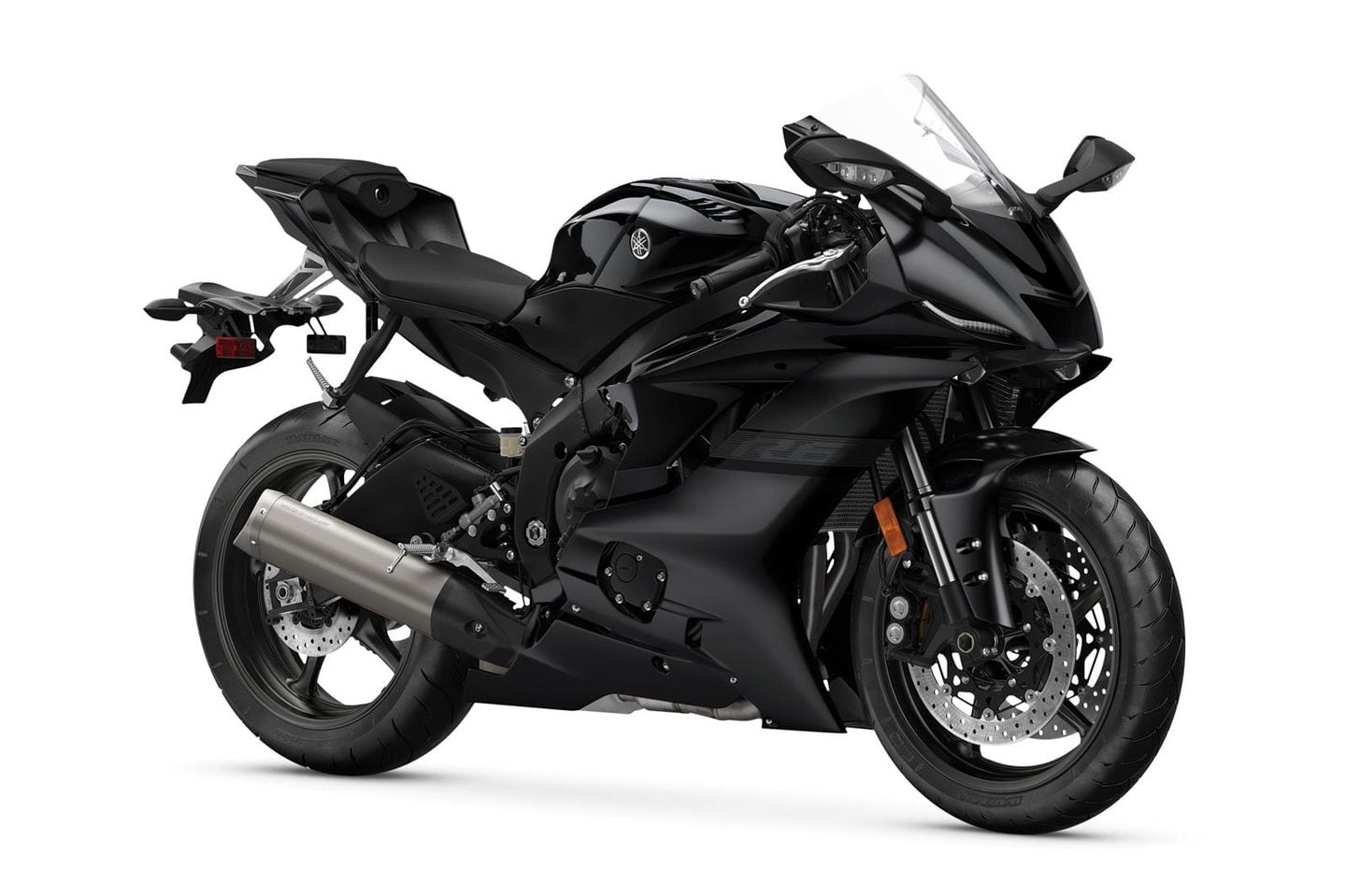
2020 Yamaha R6 Specs
Yamaha discontinued new models of the R6 in 2020, but that doesn't make it any less of an incredible motorcycle.
- Engine Type: 599cc Inline-4 DOHC, 16 valves
- Bore x Stroke: 67.0 x 42.5mm
- Power: 117 hp @ 14,500 rpm
- Torque: 50 ft-lbs @ 10,500 rpm
- Compression Ratio: 13.1:1
- Transmission: 6-speed w/ up-only quickshifter, wet multiplate clutch with slipper function
- Drive: GYTR R-Series 520 chain
- Suspension / Front: Fully adjustable 43mm KYB inverted fork; 4.7 in. travel
- Suspension / Rear: Linkage-assisted fully adjustable KYB piggyback reservoir shock; 4.7 in travel
- Brakes / Front: 320mm discs w/ 4-piston Nissin radially mounted calipers and master cylinder with ABS
- Brakes / Rear: 220mm disc w/ single-piston Nissin caliper with ABS
- Tires / Front: 120/70-17 Dunlop Sportmax GPR-300
- Tires / Rear: 180/55-17
- Price: $18,399
Dimensions, capacity, and colors:
- L x W x H: 80.3 in x 27.4 in x 45.3 in
- Seat Height: 33.5 in
- Wheelbase: 54.1 in
- Rake (Caster Angle): 24.0°
- Trail: 3.8 in
- Maximum Ground Clearance: 5.1 in
- Fuel Capacity: 4.6 gal
- Fuel Economy: 36 mpg
- Wet Weight: 419 lb
- Warranty: 1 Year (Limited Factory Warranty)
- Colors: Team Yamaha Blue; Performance Black
Put simply, the Yamaha R6 is an excellent choice for riders who want a high-performance sport motorcycle that is both thrilling to ride and visually striking.
Who is the Yamaha R6 for?
Given the powerful engine and ergonomics that are better suited for the track than the highway, the R6 is not a great option for beginner riders. Considered by many to be a racer bike first, it prioritizes sportiness over comfort.
For example, it features a shorter wheelbase, which is great for cornering, but isn't so comfortable for long rides. It also has the highest seat position in the R-Series, making it harder for beginner riders to build their balance by putting their feet firmly on the ground.
Yamaha R7: It's All About Balance
2026 means a new year for the R7 too - and the first significant major overhaul since the bike was launched in 2022. Some of these changes include:
- Six-axis IMU + full rider aids suite: Traction control, slide control, wheelie control, and brake control are a massive safety and performance leap for a mid-range bike at this price point.
- Ride-by-wire throttle (Y-CCT): Enables all the electronic aids above and modernizes the feel and precision of throttle response significantly.
- Newly revised chassis/frame: A ground-up redesign of the frame for improved rigidity in all axes is fundamental to how the bike handles, not a minor tweak.
- New TFT display + smartphone connectivity + Y-TRAC telemetry: Going from a basic display to a full 5-inch color TFT with GPS lap timing, lean angle logging, and a virtual pit board is a huge quality-of-life and track-day upgrade.
- Quickshifter (up and down): The third-gen QSS with clutchless up and downshifts is something previously reserved for more expensive sportbikes and makes a real difference in both track riding and everyday use.
The engine itself has stayed the same. The R7's 689cc parallel-twin is tuned for broad, linear torque delivery across the rev range, giving riders confident, predictable power whether commuting or carving up a canyon road.
Given these changes, the Yamaha R7 is no slouch when it comes to its specifications. In many ways it is an upgrade from previous, and different, iterations (particularly the R6). Particularly in that it was built to take some of the raw power that Yamaha bikes are known for and put it into a package more suited for the streets. All of these changes only added $200 to the price tag - making the Yamaha YZF R7 even more appealing than before.
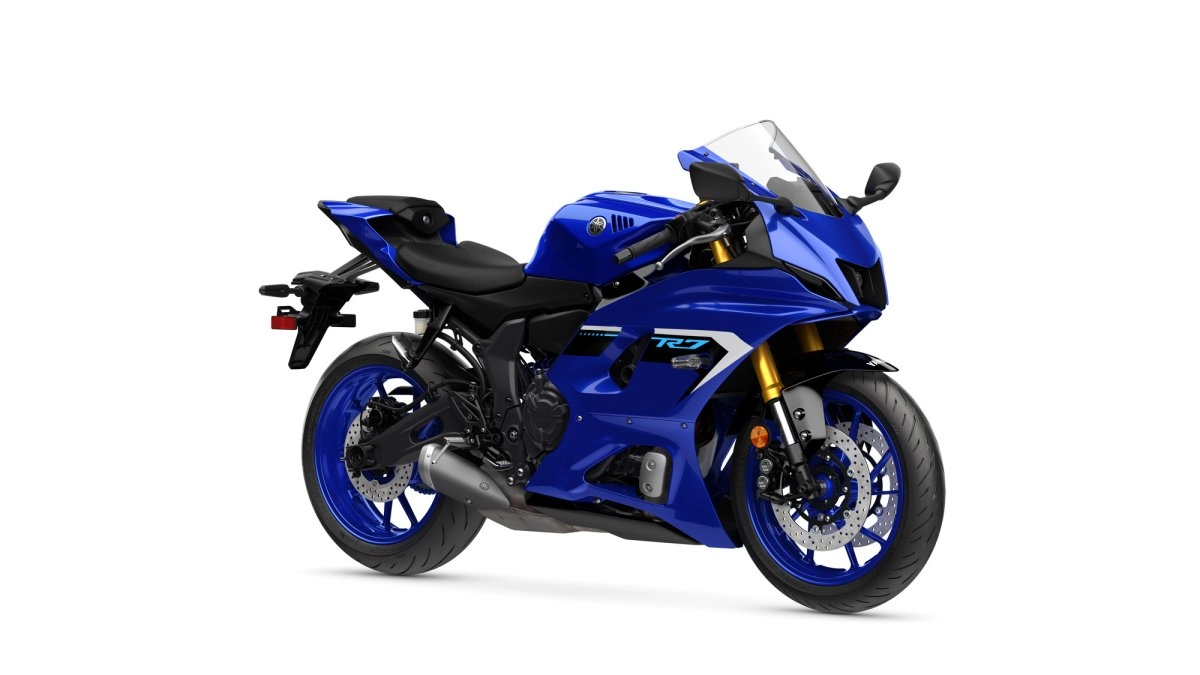
2026 Yamaha R7 Specs
Engine & Drivetrain
- Engine Type: 689cc, DOHC, liquid-cooled parallel twin; 4 valves/cyl.
- Bore x Stroke: 80.0 x 68.6mm
- Compression Ratio: 11.5:1
- Fuel Delivery: Fuel injection with YCC-T (ride-by-wire)
- Transmission: 6-speed; multiplate wet clutch; with Assist & Slipper clutch; bidirectional Quick Shift System (QSS)
- Drive: Chain
Suspension
- Front: Inverted telescopic fork; 4.7-in travel; adjustable for preload, rebound and compression
- Rear: Linked-type Monocross shock, adjustable preload and rebound; 4.8-in travel
Brakes
- Front: Dual 298mm hydraulic disc with Brake Control System and cornering ABS
- Rear: 245mm hydraulic disc with Brake Control System and ABS (defeatable for track use)
Tires
- Front: 120/70ZR17 Bridgestone® BATTLAX HYPERSPORT S23F
- Rear: 180/55ZR17 Bridgestone® BATTLAX HYPERSPORT S23R
Dimensions & Capacity
- L x W x H: 81.5 in x 28.5 in x 45.7 in
- Seat Height: 32.7 in
- Wheelbase: 54.9 in
- Rake (Caster Angle): 24.0°
- Trail: 3.6 in
- Maximum Ground Clearance: 5.3 in
- Fuel Capacity: 3.7 gal
- Fuel Economy: 59 mpg
- Wet Weight: 417 lb
General
- Price: $9,399
- Warranty: 1 Year (Limited Factory Warranty)
- Colors: Icon Blue; Midnight Black; Breaker Cyan/Raven
Who is the R7 for?
Known by many as the bike that fits neatly between the R1 and R3, the R7 is considered to be a more manageable bike than the R6, but still has that unmistakable Yamaha aura.
According to Motorcycle News, this bike is "sporty, friendly and with a voracious appetite for corners" — making it the perfect machine for new riders to start their sportbike journey. It's also half the price of the R1, and considered by many to be more fun.
Yamaha R9: It's Finally Here
The R9 was released in 2025 with an all new engine and more. So there are no changes to the specs - except for the colors. For 2026, you can get the R9 in the 70th Anniversary Edition in white and red.
It boasts a lightweight aluminum frame, advanced suspension systems, and a comprehensive electronics package including multiple rider aids. The bike's design aims to bridge the gap between street practicality and high-performance sport riding, appealing to riders seeking both comfort and track capability.
It also features a comprehensive rider aid suite that balances cutting-edge functionality with intuitive controls, giving riders access to traction control, slide control, and multiple ride modes without ever taking their focus off the road.
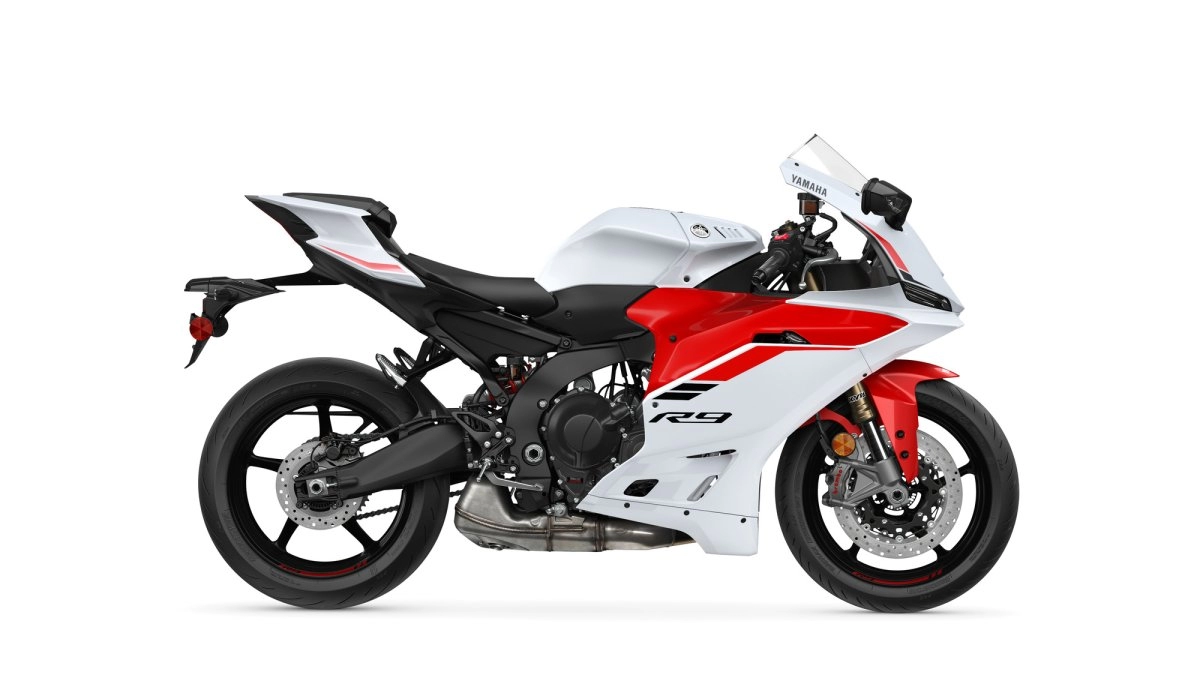
2026 Yamaha R9 Specs
- Engine Type: 890cc liquid-cooled, DOHC, inline 3-cylinder; 4 valves per cylinder
- Bore x Stroke: 78.0mm x 62.1mm
- Power: 117 hp @ 10,000 rpm
- Torque: 69 ft-lbs @ 7,000 rpm (on EU models)
- Compression Ratio: 11.5:1
- Fuel Delivery: Fuel injection with YCC-T
- Transmission: 6-speed; multiplate wet clutch; with Assist & Slipper clutch
- Drive: Chain
- Suspension / Front: 43mm KYB® inverted fork, adjustable preload, high/low speed compression and rebound; 4.7-in travel
- Suspension / Rear: KYB® single shock, adjustable preload, high/low speed compression and rebound damping; 4.6-in travel
- Brakes / Front: Dual 320mm hydraulic disc with ABS
- Brakes / Rear: 220mm hydraulic disc with ABS
- Tires / Front: 120/70ZR17 Bridgestone® BATTLAX HYPERSPORT S22F
- Tires / Rear: 180/55ZR17 Bridgestone® BATTLAX HYPERSPORT S22R
- Price: $12,499
Dimensions, capacity, and colors:
- L x W x H: 81.5 in x 27.8 in x 45.7 in
- Seat Height: 32.7 in
- Wheelbase: 55.9 in
- Rake (Caster Angle): 22.6°
- Trail: 3.7 in
- Maximum Ground Clearance: 5.5 in
- Fuel Capacity: 3.7 gal
- Fuel Economy: 48 mpg
- Wet Weight: 430 lb
- Warranty: 1 Year (Limited Factory Warranty)
- Colors: Team Yamaha Blue; Matte Raven Black; Intensity White/Redline
Who is the Yamaha R9 for?
Yamaha's 2026 YZF-R9 targets riders who seek a blend of sportbike performance with enhanced everyday usability. Unlike some of the more aggressive counterparts in Yamaha's lineup, the R9 appeals to riders looking for a practical yet action-packed ride experience.
This bike caters to enthusiasts who appreciate advanced technology and race-inspired design elements but prioritize comfort and versatility for both street and occasional track use. With its revamped engine and a chassis optimized for real-world riding dynamics, the R9 aims to attract riders transitioning from smaller sportbikes or seeking an upgrade without compromising on usability.
Summary
The R-Series has a reputation for offering cutting-edge technology and advanced features, making them a top choice for enthusiasts who demand the best in performance and handling.
The racing pedigree that accompanies the Yamaha R-Series means there's a bike for almost every experience level and use case. Many of their motorcycles are equally as adept on the track as on the road, but it's important to keep in mind your experience level and goals when choosing your next bike.
Do you have questions about any of the Yamaha R-Series bikes listed above? Already have one and ready to accessorize? Contact us. We've been in business since 2011 and carry accessories for over 700 motorcycle models. You can shop by brand, product, or bike.

